
 Joanna Pachnik
This week gave us a fairly good demonstration of what supply chain resilience actually costs.
A key Saudi pipeline was knocked offline just as it had become increasingly important as an alternative to the Strait of Hormuz. Dell is chasing an expanding list of components to keep up with AI infrastructure demand. Hyundai wants to source 80% of its North American parts locally, while GE Aerospace is spending nearly $12 billion to bring one of the aerospace industry's most difficult manufacturing processes closer under its control.
At the same time, governments are intervening more directly in supply chains. Europe is considering restrictions on chemical and plastics imports, the U.S. and Mexico are racing toward a new trade agreement, and U.S. Customs is demanding significantly better visibility into who is actually behind imported goods.
The common thread is not simply deglobalization. Companies still need global supply networks. What is changing is how much they are willing to pay for alternatives, visibility and control when those networks fail.
Here are 10 developments we think supply chain leaders should be watching this week.

Saudi pipeline outage puts up to 4% of global oil supply at risk
Saudi Arabia's East-West Pipeline was shut after an aerial attack, removing one of the most important alternatives to moving Saudi crude through the Strait of Hormuz. The pipeline connects oil fields in the east of the country with the Red Sea port of Yanbu and has become particularly important while shipping through Hormuz remains severely disrupted.
The implications could be significant. Traders and Saudi oil buyers told Reuters that without restarting the pipeline, Saudi Arabia could run through export inventories at Yanbu within days. That could remove as much as 4% of global oil supply from the market.
Source: Reuters, September 13, 2026, Saudi pipeline outage threatens loss of 4% of global oil supply
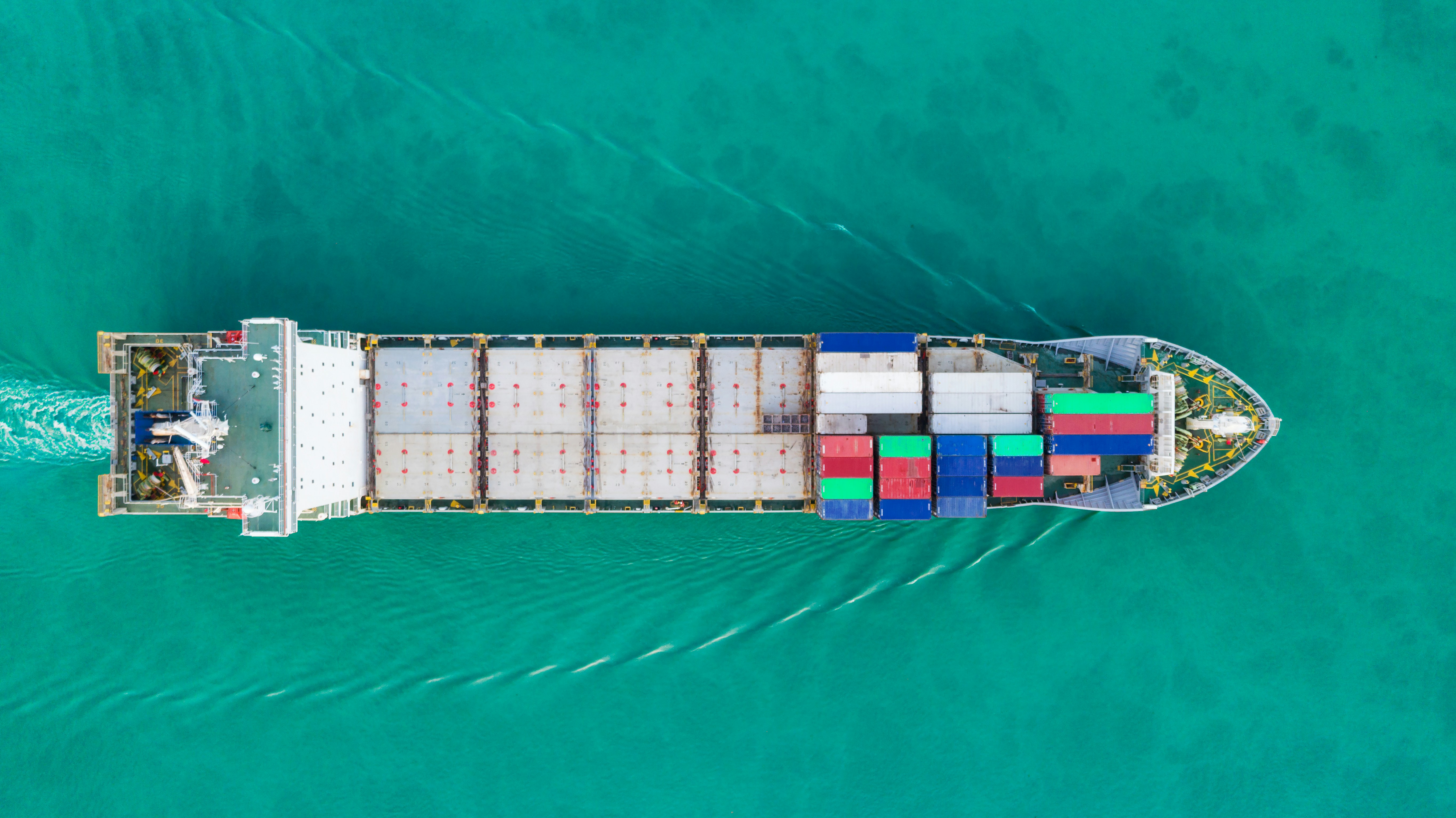
The Strait of Hormuz problem is becoming a network problem
The Saudi pipeline attack matters even more because the East-West route was helping compensate for disruption in the Strait of Hormuz. Saudi Arabia had been moving crude west to Yanbu to avoid the constrained Gulf route, while fighting in Yemen has created additional uncertainty around Red Sea shipping.
The result is no longer one disrupted shipping lane. The alternative routes companies and governments were relying on are themselves becoming exposed.
Source: Reuters, September 12, 2026, Saudis shut down oil pipeline as Houthis tighten grip on Red Sea shipping

Dell is chasing a widening list of parts as AI demand strains supply
Dell says supply constraints for AI infrastructure are spreading beyond the components that received most of the attention earlier in the year. The company is dealing not only with tight memory, storage and processor supply but also constraints affecting networking, power and cooling equipment needed to build complete AI systems.
Dell has been redirecting some inputs from its PC business toward AI infrastructure and working with customers to obtain longer-range demand forecasts and secure capacity earlier.
The situation was summarized rather well by COO Jeffrey Clarke: “Welcome to the life of a supply chain person at Dell. This is what we do, chasing parts.”
Source: Supply Chain Dive, September 10, 2026, Dell faces widening supply shortages as high AI demand persists
Hyundai wants 80% of its North American parts sourced locally
Hyundai plans to increase the share of locally sourced parts used in North American vehicle production from approximately 60% today to 80% by 2030.
The rationale is not only tariffs. Hyundai says greater localization should reduce logistics costs, improve supply stability and support its expanding North American manufacturing footprint.
This is part of a broader localization strategy across Hyundai's major markets rather than simply a temporary reaction to U.S. trade policy.
Source: Supply Chain Dive, September 10, 2026, Why Hyundai is raising its local sourcing goal in North America

GE Aerospace spends nearly $12 billion to control a critical supply bottleneck
GE Aerospace agreed to acquire Consolidated Precision Products for approximately $11.75 billion, bringing a critical part of its jet-engine supply chain closer under its control.
The target produces precision castings, one of the most technically demanding and constrained parts of aerospace manufacturing. Despite broader improvements in aerospace supply chains, castings remain a bottleneck as engine manufacturers try to increase production and aftermarket capacity.
The deal is therefore about more than acquiring another supplier. GE is securing capacity and technical know-how in a process that has repeatedly constrained its ability to meet demand.
Source: Reuters, September 8, 2026, GE Aerospace to buy castings maker CPP for nearly $12 billion
Europe is considering broad restrictions on chemical and plastics imports
France, Germany and Italy are among the countries supporting discussions around new EU safeguard measures covering chemicals and plastics. The measures could apply to imports from all trading partners rather than targeting China alone, although rapidly increasing Chinese exports are a major driver of the concern.
Products under discussion reportedly include materials such as PET, epoxy resins and glass fiber, inputs that sit inside packaging, automotive, construction and many industrial supply chains.
Source: Reuters, September 10, 2026, EU countries seek import curbs on chemicals, plastics
Europe also wants public procurement to favor resilience and European supply
The European Commission proposed a major overhaul of public procurement rules covering a market worth roughly €2.5 trillion annually. The proposed framework would allow authorities to consider supply chain disruption, strategic dependency, cybersecurity and foreign influence when awarding contracts.
It would also create mechanisms allowing authorities to favor European content in strategic sectors or restrict certain bids with low EU content.
This is significant because governments are beginning to use procurement policy itself as an industrial and supply chain tool.
Source: Reuters, September 9, 2026, EU proposes simpler public tender rules, 'Buy European' criteria to cut foreign dependence
The U.S. and Mexico are racing toward a bilateral trade agreement
The United States and Mexico are trying to reach an interim trade agreement before the November U.S. midterm elections, according to Reuters, after negotiations between Washington and Canada deteriorated.
The discussions include automotive content, Chinese investment in Mexico and possible relief from U.S. Section 232 tariffs. One of the most important unresolved questions is how much additional U.S. content Washington will demand in vehicles produced in Mexico.
The negotiations could materially change the economics of North American automotive supply chains, particularly if Mexico receives tariff treatment that differs from Canada's.
Source: Reuters, September 11, 2026, Mexico, Washington sprint toward bilateral trade deal before US elections

Latvia wants a 300% tariff on Russian and Belarusian grain
Latvia plans to impose a 300% tariff on grain arriving from Russia and Belarus as Baltic governments consider restricting Russian grain flows through their ports.
The timing matters. Russian exporters have increasingly relied on Baltic routes after Ukrainian attacks disrupted ports in the Black Sea and Sea of Azov. Those southern routes handled approximately 90% of Russia's seaborne grain exports in the previous exporting season.
Closing or materially increasing the cost of Baltic alternatives would remove another route from an already constrained network.
Source: Reuters, September 7, 2026, Latvia plans 300% tariff on grain from Russia and Belarus
U.S. Customs wants much deeper visibility into imported goods
U.S. Customs and Border Protection is considering new requirements aimed at improving visibility into the supply chains behind goods entering the United States.
Among the ideas under consideration are collecting foreign export documentation, improving manufacturer identification and using supply chain traceability technology to verify country of origin and identify goods routed through third countries.
Separately, CBP warned that beginning September 18 it can void import privileges for foreign shippers whose registration information is inaccurate.
Sources: Supply Chain Dive, September 8 and September 11, 2026, CBP wants stakeholder input on supply chain visibility push and CBP: Shippers could lose import privileges if customs info is wrong
What we’re watching
The stories this week point in the same direction: resilience is becoming something companies increasingly have to pay for.
Hyundai is paying for it through localization. GE Aerospace is paying for it through ownership of constrained capacity. Dell is securing components earlier and asking customers for better forecasts. Governments are paying for it through industrial policy, trade protection and increasingly detailed supply chain controls.
For years, supply chains were optimized primarily around cost, inventory and service. Those measures still matter, but another one is becoming harder to ignore: how many realistic options do we have when the preferred path stops working?
The companies that can answer that question at the supplier, material, production, transportation and market level will be in a much better position than those discovering their dependencies only after the disruption starts.
 Weekly briefing · Aug 29, 2026
 Weekly briefing · Aug 22, 2026