
 Joanna Pachnik
Another screen. The same problem.
For twenty years, the answer to almost every supply chain problem has been more visibility. Another dashboard. Another control tower. Another report. Another real-time feed.
Now AI is being added on top, promising even more visibility, faster analysis and better-looking summaries.
But most companies don't need another dashboard. They need someone, or something, to actually make the decision.
Five days to stockout. Now what?
Think about a basic inventory problem. Your dashboard tells you that a product will stock out in five days. Great. Now what?
| Option | The question to resolve |
|---|---|
| Expedite | Do you expedite the next shipment? |
| Transfer | Move inventory from another DC? |
| Reallocate | Change allocation between customers? |
| Produce | Increase production? |
| Accept the stockout | Is the cost of avoiding it higher than the lost margin? |
Seeing the problem is not the same as knowing what to do about it.
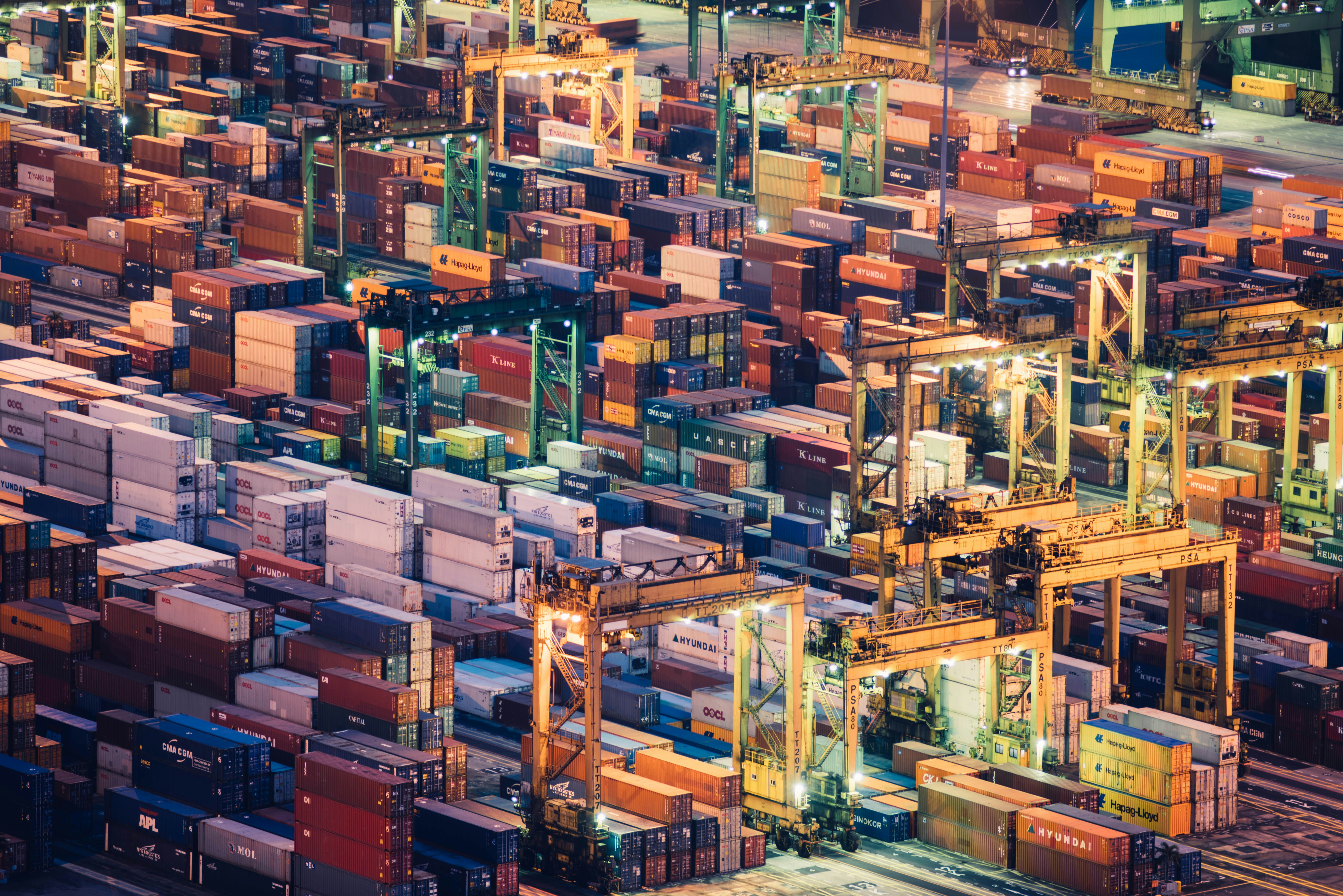
What changed after the alert?
This is where many supply chain control towers have disappointed. Companies spent millions connecting systems and putting information on one screen. They can see late shipments, inventory shortages, supplier delays and forecast misses earlier than before. That has value.
But in many cases the next step is still exactly the same: someone sees a red alert, opens another system, downloads some data, calls three people and schedules a meeting to decide what to do.
“We improved the screen. We didn't improve the decision.”
And now there is a risk that we do exactly the same thing with AI.
It is easy to put a chatbot on top of a dashboard. It is easy to ask AI to summarize what happened overnight, explain why a KPI moved or generate another chart. Some of that is useful, but it is still mostly a better way of looking at information we already have.
Prepare the decision.
The bigger opportunity is what happens after the alert.
If a shipment is going to be late, AI should be able to identify the affected orders, check available inventory, understand customer priorities, evaluate alternative transportation options, calculate the cost of each option and recommend what should happen next. For decisions where the rules and risk allow it, it should eventually be able to execute the action as well.
That is very different from another dashboard telling you that the shipment is late.
The same applies across supply chain.
| The dashboard shows | AI should help determine |
|---|---|
| Inventory is too high | Which orders should change. |
| A supplier is late | Which production orders are affected and what alternatives exist. |
| Transportation cost increased | Which loads, lanes or decisions are causing it and what can be changed. |
Of course, not every decision should be automated. Some are too large, too unusual or require judgment that should stay with a person. But even then, AI can do much more than display the problem. It can prepare the options, show the financial and operational impact of each one and give the person responsible for the decision something concrete to act on.
Measure the outcome.
This also changes what we should measure when evaluating an AI solution.
A beautiful interface is not a business case. Neither is the number of alerts generated or dashboards created. I would rather know:
How many exceptions were resolved without manual work?
How much faster were decisions made?
How many expedites were avoided?
How much inventory was reduced?
How much planner time was released?
Those are outcomes. Another screen is not.
This doesn't mean dashboards are useless. Visibility matters, especially when information is scattered across systems and nobody has a complete picture of what is happening. But visibility should be the starting point, not the final product.
We already spent twenty years building systems that tell us what happened.
AI gives us the opportunity to build systems that help decide what happens next.
It would be a shame to use it just to build better dashboards.
Follow one alert.
Take the most important alerts on your existing dashboards and ask what happens after each one appears.
- Who investigates it?
- What information do they collect?
- What options do they consider?
- What decision do they make?
That is where you should apply AI.
The lesson
A dashboard can tell you that you have a problem. It cannot solve it. The real opportunity with AI is not another layer of visibility. It is reducing the work between seeing the problem and doing something about it.
 Opinion · Oct 4, 2026
 Opinion · Sep 19, 2026
 Opinion · Sep 13, 2026